
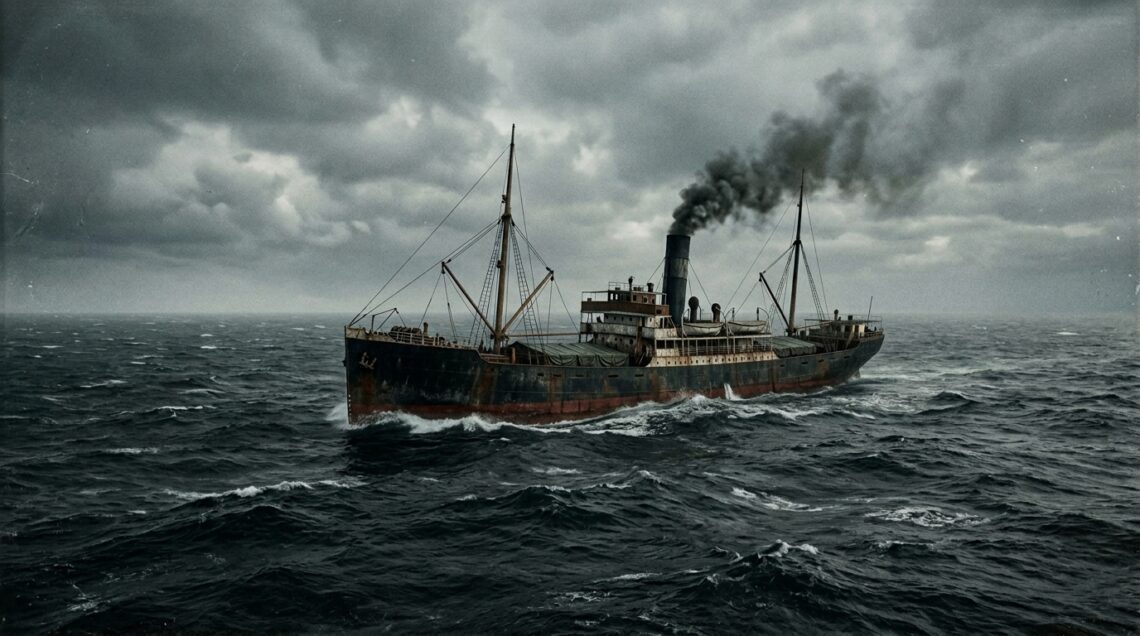
The Ocean Problem
Introduction
In 1875, while Gustavus Swift was revolutionising overland meat transport in America, engineers across the Atlantic faced a more daunting challenge. Rail journeys lasted days. Ocean voyages lasted weeks.
The distance from New Zealand to England: approximately 19,000 kilometres. Transit time by sailing ship: three months or more. Even with steam power cutting journey times, the voyage remained measured in weeks, not days.
Yet the Southern Hemisphere had something the Northern Hemisphere desperately wanted: meat, and plenty of it. Australia and New Zealand’s vast pastoral lands supported millions of sheep and cattle. Argentina’s pampas produced beef in quantities that dwarfed European capacity. And the growing British Empire had millions of urban mouths to feed.
The economics were tantalising. Meat in Sydney cost a fraction of London prices. The problem was getting it there before it rotted.
This is the story of how engineers solved the ocean crossing—and how that solution transformed South Africa from an agricultural backwater into a global fruit export powerhouse.
The Race to Cross the Ocean
The quest for refrigerated ocean transport began almost simultaneously in multiple countries. The prize was enormous: whoever solved the problem would unlock trade routes worth fortunes.
The French Connection: Charles Tellier
Charles Tellier, a French engineer, had been working on refrigeration technology since the 1850s. By 1876, he had developed an ether-based mechanical refrigeration system capable of maintaining temperatures at 0°C.
Tellier installed his system aboard the Frigorifique, a converted cargo vessel. In September 1876, the ship departed Rouen, France, carrying a cargo of meat bound for Buenos Aires, Argentina—a journey of approximately 8,000 kilometres.
The voyage took 105 days. The refrigeration system operated continuously. When the Frigorifique arrived, the meat was still cold.
It was a technical triumph and a commercial failure. The journey had taken so long, and the system consumed so much fuel, that the economics made no sense. But Tellier had proved the principle: mechanical refrigeration could preserve meat across ocean distances.
Ferdinand Carré’s Improvement
Another French engineer, Ferdinand Carré, improved upon Tellier’s design. Carré’s ammonia absorption system was more efficient and reliable. In 1877, he successfully shipped 150 tonnes of frozen meat from Sydney, Australia, to the United Kingdom—a voyage of over 50 days.
The meat arrived frozen solid. British consumers pronounced it edible, if not exceptional. The technology worked.
The Dunedin: The Voyage That Changed Everything
The commercial breakthrough came in 1882 with the three-masted sailing ship Dunedin.
The Dunedin departed Port Chalmers, New Zealand, on 15 February 1882, carrying 4,331 mutton carcasses, 598 lamb carcasses, and 22 pig carcasses—all frozen solid using a Bell-Coleman compression refrigeration machine.
The voyage to London took 98 days. When the cargo holds were opened at the East India Docks, the meat was still frozen and in excellent condition.
More importantly, it was profitable.
The Dunedin’s success sparked immediate imitation. Within a year, multiple ships were fitting refrigeration equipment. Within a decade, refrigerated shipping had transformed the global meat trade.
Why the Dunedin Succeeded
The Dunedin’s success wasn’t just about having working refrigeration equipment. Several factors converged:
- Proper Pre-Cooling: The meat was thoroughly frozen before loading, not merely chilled. The ship’s refrigeration system maintained temperature rather than trying to cool warm cargo—a crucial distinction that many later operations would forget.
- Reliable Equipment: The Bell-Coleman compressor, while primitive by modern standards, proved robust enough for the extended voyage. It could be maintained and repaired at sea by the ship’s engineers.
- Insulation: The cargo holds were properly insulated with charcoal, sawdust, and other materials that minimised heat infiltration from the tropical waters the ship traversed.
- Adequate Capacity: The refrigeration system was sized for the cargo volume and voyage conditions, not undersized to save costs.
These same principles—pre-cooling, reliable equipment, proper insulation, adequate capacity—remain foundational to cold chain operations today.
The Reefer Revolution
Following the Dunedin’s success, refrigerated shipping expanded rapidly. By the outbreak of World War I in 1914, over 200 dedicated reefer ships were in service worldwide, most flying British or Norwegian flags.
Two Types of Cold
Refrigerated shipping evolved into two distinct categories, each with different technical requirements:
- Frozen Cargo (Meat and Fish): Required temperatures of -10°C to -18°C or lower. The cargo was completely frozen before loading and needed to remain frozen throughout the voyage. Refrigeration systems had significant cooling capacity but didn’t need precise temperature control—as long as the cargo stayed frozen, it was fine.
- Chilled Cargo (Fruit): Required temperatures just above freezing, typically 0°C to 4°C depending on the product. The cargo was alive in a metabolic sense—fruit continues respiring after harvest—and needed precise temperature control. Too cold and the fruit froze, destroying texture. Too warm and it ripened prematurely or rotted.
The fruit trade would prove more technically demanding and commercially significant than the meat trade, particularly for Southern Hemisphere countries like South Africa.
The Banana Boats
The banana trade pioneered many innovations that later benefited other fruit exporters.
Bananas are notoriously temperature-sensitive. They continue to ripen after harvest, producing ethylene gas that accelerates the process. Without temperature control and ventilation, a cargo of bananas could go from green to overripe to rotten in days.
By 1899, the United Fruit Company had assembled a fleet of ships specifically designed for banana transport. These vessels featured:
- Refrigerated holds with precise temperature control
- Ventilation systems to remove ethylene gas
- White-painted hulls to reduce solar heat absorption
- Speed—faster voyages meant less time for ripening
The technologies developed for bananas would later be adapted for citrus, stone fruit, grapes, and other temperature-sensitive products.
South Africa Enters the Game
South Africa’s entry into refrigerated shipping came through a different product than meat: fruit. And it came, like many innovations, from economic desperation.
The Phylloxera Crisis
In the 1870s and 1880s, the Great Phylloxera epidemic devastated wine regions worldwide. The microscopic aphid attacked vine roots, destroying entire vineyards. South Africa’s Western Cape wine industry, established over two centuries, faced ruin.
Farmers needed alternatives. The newly completed Hex River Valley railway suggested a possibility: deciduous fruit could travel from inland orchards to Cape Town’s port. If it could then cross the ocean in edible condition, Western Cape farmers might find new markets in Europe during the Northern Hemisphere winter.
The First Attempts
The first consignment of export fruit from South Africa left Cape Town in 1889. The results were disastrous—the fruit arrived in Britain in such poor condition that the entire shipment was destroyed.
The failure illuminated a critical lesson: refrigerated shipping was only as good as the weakest link in the chain. It didn’t matter if the ship’s holds were perfectly maintained at optimal temperature. If the fruit wasn’t properly cooled before loading, if it sat in the Cape Town sun waiting for the ship, if the land-side cold chain failed, the ocean voyage couldn’t compensate.
The Drummond Castle Success
Three years of experimentation followed. Farmers, shippers, and engineers worked to understand what had gone wrong and how to fix it.
In 1892, the Drummond Castle carried the first successful shipment of South African export fruit to the United Kingdom. The ship had specially fitted refrigerated holds, but equally important were the improvements in pre-voyage handling:
- Fruit was harvested at optimal maturity
- Rapid transport from orchards to port
- Pre-cooling before loading
- Careful temperature management during loading (minimising time cargo doors were open)
The success of the Drummond Castle voyage demonstrated that South African fruit could reach European markets in saleable condition. The industry would spend the next century refining the process.
Imperial Cold Storage: The Missing Link
The Graaff family recognised what many fruit exporters had learned painfully: you cannot rely on ships alone. The land-side cold chain needed investment.
In 1899, the Graaff family established Imperial Cold Storage—the first cold storage facility in South Africa. Located in Cape Town, it provided the crucial pre-cooling and storage capacity that refrigerated shipping required.
Imperial Cold Storage represented the same insight that drove Gustavus Swift’s vertical integration in America: temperature-controlled transport is a system, not just a vehicle. Every link matters. A cold store that could properly prepare fruit before loading was as essential as the ship’s refrigeration equipment.
The Roslin Castle Era
The evolution of South African fruit shipping continued through the early 20th century. In 1935, the Roslin Castle arrived in Cape Town—the first fully refrigerated ship purpose-built for South African fruit exports.
Unlike earlier vessels that carried refrigerated cargo in specially fitted holds alongside conventional freight, the Roslin Castle was designed entirely around temperature control. Her holds could be cooled to different temperatures for different products—chilled for fresh fruit, frozen for meat and fish.
The Roslin Castle and her sister ships became regular callers at South African ports, establishing the shipping routes that would define the country’s export trade for decades.
Institutional Infrastructure: The PPECB
By 1926, South Africa’s perishable export industry had grown substantial enough to require formal regulation. The Perishable Products Export Control Board (PPECB) was established by act of parliament.
The PPECB’s mandate was quality certification and cold chain management—ensuring that South African exports met international standards and arrived in marketable condition. Its creation represented institutional recognition that cold chain integrity required oversight across multiple operators and stages.
The PPECB would evolve over the following century, but its core function remained unchanged: maintaining the cold chain standards that South African export reputation depended upon.
The Container Revolution
The greatest transformation in refrigerated shipping came not from refrigeration technology but from cargo handling: the shipping container.
Before Containers
Traditional cargo shipping was labour-intensive and time-consuming. Cargo arrived at ports in various forms—crates, barrels, sacks, pallets—and was loaded piece by piece into ship holds. Unloading reversed the process.
For refrigerated cargo, this created serious problems:
- Extended Port Time: Loading and unloading took days, during which temperature control was difficult to maintain. Cargo might sit on docks exposed to ambient conditions for hours.
- Handling Damage: Every time cargo was touched, it risked damage. Fruit bruises easily. Frozen meat can be damaged by improper stacking.
- Inconsistent Conditions: Different portions of a shipment experienced different temperature histories depending on loading sequence and timing.
The Container Solution
The standardised shipping container, developed in the 1950s and widely adopted from the 1960s, transformed global logistics. For refrigerated cargo, containerisation offered specific advantages:
- Controlled Environment: A refrigerated container (reefer) maintains its internal temperature from loading through delivery. The cargo experiences consistent conditions throughout.
- Reduced Handling: Containers are loaded at origin and unloaded at destination. Intermediate handling is minimised. The sealed container protects cargo from the elements and from contamination.
- Faster Port Operations: Container ships load and unload in hours rather than days. Reduced port time means less opportunity for temperature excursions.
- Intermodal Capability: The same container travels by ship, rail, and truck without cargo transfer. The cold chain extends seamlessly from pack house to distribution centre.
The Reefer Container
The refrigerated container—typically 20 or 40 feet in length—became the workhorse of modern cold chain shipping. By 2010, approximately 90% of refrigerated maritime transport was containerised, compared to just 33% in 1980.
Modern reefer containers feature:
- Integrated Refrigeration Units: Self-contained mechanical refrigeration powered by onboard generators or external power supplies (at terminals, aboard ships, or on truck chassis).
- Precise Temperature Control: Microprocessor-controlled systems maintaining temperatures within 0.5°C of setpoint across a range from -30°C to +30°C.
- Controlled Atmosphere Capability: Some containers can regulate oxygen, carbon dioxide, and nitrogen levels to slow ripening and extend shelf life beyond what temperature control alone achieves.
- Remote Monitoring: Modern containers transmit temperature data, equipment status, and location information via satellite, allowing real-time oversight of cargo conditions.
South Africa’s Container Transition
South Africa’s fruit export industry embraced containerisation rapidly. The technology aligned perfectly with the industry’s needs:
- Extended Seasons: Controlled atmosphere containers allowed fruit to reach markets in saleable condition even from distant orchards or late in the season.
- Quality Consistency: Container shipping reduced the variability that plagued traditional methods. Exporters could promise—and deliver—consistent product quality.
- Market Diversification: Containerisation opened markets beyond traditional European destinations. Middle Eastern, Asian, and American ports became accessible.
- Year-Round Operations: The industry could ship throughout the season rather than concentrating on the brief windows when traditional ships called.
Today, the Port of Cape Town handles hundreds of thousands of reefer containers annually. The Hex River Valley fruit that once struggled to survive the journey to Britain now reaches markets on every continent.
The Physics of Ocean Transport
Understanding why refrigerated shipping works—and why it sometimes fails—requires understanding the physics of ocean transport.
The Heat Equation
A reefer container on a ship experiences heat from multiple sources:
- Conduction: Heat transfers through the container walls, floor, and ceiling from warmer ambient air. The rate depends on the temperature difference and the insulation’s effectiveness.
- Solar Radiation: Containers on deck experience direct sunlight. A container’s surface can reach 60°C or higher under tropical sun, dramatically increasing the heat load on the refrigeration system.
- Product Heat: Fresh produce continues respiring, generating heat. The amount depends on the product type, temperature, and atmospheric composition. A container of bananas generates significantly more product heat than a container of apples.
- Infiltration: Air leaks through seals and openings, admitting warm, humid outside air.
The refrigeration system must remove heat as fast as it enters. If heat influx exceeds cooling capacity, temperature rises.
Why Pre-Cooling Matters
This is why pre-cooling before loading is critical. A reefer container’s refrigeration system is designed to maintain temperature, not reduce it significantly.
Consider the mathematics: A container loaded with fruit at 20°C must remove approximately 25 kilojoules of heat energy per kilogram to cool the cargo to the optimal 2°C storage temperature. For a full container holding 20 tonnes of fruit, that’s 500 million joules of heat energy that must be extracted before the cargo is even stable.
If the container’s refrigeration system has 10 kilowatts of cooling capacity, removing that heat takes nearly 14 hours—during which the cargo experiences temperature stress and the refrigeration system works at maximum load.
By contrast, fruit pre-cooled to near storage temperature before loading requires the refrigeration system only to handle ongoing heat infiltration—a far smaller load. The system operates efficiently, temperature remains stable, and product quality is preserved.
The Failure Modes
Cold chain breaks in ocean transport typically stem from predictable causes:
- Inadequate Pre-Cooling: Cargo loaded warm overwhelms refrigeration capacity. Temperature rises, product deteriorates.
- Equipment Failure: Refrigeration systems malfunction. Without redundancy or rapid repair, temperature excursions follow.
- Power Interruption: Reefer containers require continuous electrical power. Connection failures, generator problems, or port handling errors can interrupt power and allow temperature rise.
- Improper Loading: Poor airflow patterns within containers create hot spots. Fruit respiring in stagnant air generates local temperature increases even when the container’s overall cooling is adequate.
- Extended Transit: Delays—weather, port congestion, routing changes—extend voyage time beyond planned duration. Accumulated small temperature variations or product respiration can exceed the system’s capacity to maintain optimal conditions.
Each failure mode has corresponding prevention strategies. Pre-cooling requirements, equipment maintenance, power supply redundancy, loading protocols, and contingency planning all address specific risk factors.
Modern Challenges: What Hasn’t Changed
Despite 140 years of technological advancement, the fundamental challenges of refrigerated ocean transport remain remarkably consistent.
The Weak Link Problem
The cold chain is only as strong as its weakest link. Modern South African fruit export operations involve multiple handoffs:
- Harvest and field transport to pack house
- Sorting, grading, and packing
- Pre-cooling (forced-air cooling to protocol temperature)
- Cold storage awaiting container availability
- Loading into reefer container
- Transport to port
- Staging at port terminal
- Loading onto vessel
- Ocean transit (potentially with transshipment)
- Unloading at destination port
- Transport to distribution centre
- Storage and final delivery
Temperature excursions can occur at any stage. Research on South African fruit exports consistently identifies the same vulnerable points: transitions between stages, particularly the handoff from cold store to container and the container loading process itself.
The Numbers Today
South African citrus exports alone generate approximately R20 billion in annual revenue. Citrus represents 60% of the country’s fruit export volumes.
These volumes create their own challenges:
- Road transport congestion during peak season
- Cold storage capacity constraints
- Reefer container shortages
- Port delays and vessel scheduling issues
Each challenge creates potential for temperature excursions. A container sitting at a congested port terminal, disconnected from power while awaiting vessel assignment, experiences temperature rise. Multiply that across thousands of containers, and the cumulative impact on product quality becomes significant.
The Protocol Problem
Increasingly, export markets impose specific cold chain requirements as phytosanitary measures. Cold treatment protocols—maintaining fruit at prescribed temperatures for prescribed durations—serve as pest control, ensuring that insects or diseases don’t travel with exported produce.
These protocols leave no margin for error. A temperature excursion during cold treatment doesn’t just affect product quality—it can result in the entire shipment being rejected at the destination port.
Research on South African citrus cold chain logistics consistently finds that temperature variability during pre-cooling and container loading represents the most significant risk to protocol compliance. The ocean voyage itself, once the cargo is loaded and the container is operating correctly, is typically the most stable portion of the journey.
The Connection to Modern Operations
The engineers who designed the Dunedin’s refrigeration system in 1882 would recognise the principles governing modern reefer containers. The physics are identical. The scale and technology have changed; the fundamentals have not.
Lessons That Endure
- Pre-cooling is non-negotiable: The Drummond Castle succeeded where earlier shipments failed because the fruit was properly prepared before loading. Modern protocols specify pre-cooling requirements precisely because this lesson was learned repeatedly through failure.
- System thinking wins: The Graaff family’s investment in Imperial Cold Storage recognised that refrigerated ships were necessary but not sufficient. Modern integrated cold chain operators—who control transport, storage, and monitoring—outperform fragmented alternatives for the same reason.
- Equipment sizing matters: The Dunedin’s refrigeration system was adequate for its cargo and voyage conditions. Modern reefer containers work reliably because they’re designed with appropriate capacity margins. Undersized equipment fails under stress—whether that stress is 1882 tropical seas or 2025 Gauteng summer heat.
- Documentation enables accountability: The PPECB was established because quality assurance required verification. Modern temperature monitoring systems—providing continuous data throughout the cold chain—serve the same purpose at vastly greater precision.
South African Specifics
South Africa’s cold chain infrastructure has particular characteristics shaped by geography and history:
- Distance to Markets: South Africa is far from major markets. The voyage to Europe takes approximately two weeks; to Asia, longer. Extended transit times demand robust cold chain practices—there’s no margin for “good enough.”
- Seasonal Concentration: Much of South African fruit production occurs in relatively brief windows. The cold chain must handle enormous volumes during peak season, creating capacity constraints that don’t exist for year-round production regions.
- Port Concentration: The Port of Cape Town handles the majority of Western Cape fruit exports. Congestion at this single facility creates system-wide vulnerability.
- Altitude Variations: Unlike maritime nations where port and production areas are at similar elevations, South Africa’s geography includes significant altitude variations. Refrigeration equipment sized for Johannesburg’s 1,750-metre altitude performs differently at Cape Town’s sea level—and equipment moved between locations may not operate as expected.
These characteristics don’t change the physics of refrigerated transport. They change how that physics must be managed in South African conditions.
Conclusion: The Voyage Continues
When the Dunedin departed New Zealand in 1882, the idea that frozen meat could cross oceans seemed barely plausible. When the Drummond Castle carried South African fruit to Britain in 1892, establishing the country’s export industry seemed wildly optimistic.
Today, South Africa exports billions of rands worth of fresh produce annually to markets on every continent. That trade exists because engineers solved the ocean transport problem—and because successive generations improved upon their solutions.
The physics remain unchanged. Cold air sinks. Heat transfers through inadequate insulation. Produce respires and generates heat. Temperature excursions destroy product quality. These realities confronted the Dunedin’s engineers in 1882, and they confront modern cold chain operators today.
What has changed is the precision and scale of our response. Microprocessor-controlled refrigeration maintains temperatures within fractions of a degree. Satellite monitoring tracks cargo conditions in real-time across ocean crossings. Controlled atmosphere technology extends shelf life beyond what temperature control alone achieves.
But the fundamentals—pre-cool properly, maintain temperature consistently, monitor continuously, document everything—would be instantly recognisable to the engineers who made the first successful refrigerated voyages.
The ships that made continents neighbours did so by solving practical problems with practical engineering. The legacy of their work surrounds us, in every refrigerated container that arrives at South African ports, in every fruit shipment that reaches European or Asian markets in perfect condition, in the cold chain infrastructure that makes global trade in perishable goods possible.
Sources & References
Historical Shipping Sources
- FreightWaves. “Maritime History Notes: 150 Years of Refrigeration.”
- Wikipedia. “Cold chain.”
- Escola Europea. “#DidYouKnow – A Short Story of the Refrigerated Container.”
- MSC. “Cold Chain Logistics Explained.”
- Moon Refrigeration. “History of the Reefer Container.”
South African History
- Delecta Fruit. “Our History.”
- Maritime Economics South Africa. “Refrigerated Ships.”
- SouthAfrica.co.za. “Pioneers of the South African Fruit Export Industry.”
Industry Analysis
- Journal of Transport and Supply Chain Management. “An Analysis of the Influence of Logistics Activities on the Export Cold Chain of Temperature Sensitive Fruit through the Port of Cape Town.”
- ScienceDirect. “Inefficiency in Land-Side Cold-Chain Logistics: Solutions to Improve the Handling of Citrus During Preparation for Cold-Treatment Protocols.”
- Transport Geography. “The Cold Chain and its Logistics.”
- U.S. International Trade Administration. “South Africa Cold Chain Facilities.”
Logistics and Operations
- DSV South Africa. “How Cold Chain Impacts Perishables in SA.”
- DSV/Panalpina. “How the Cold Chain and Freight Forwarders Have Evolved Together.”
- Cold Chain Packing & Logistics. “The Development of Cold Chain Solutions in the Healthcare Industry.”
- Sensitech. “A Brief History of Sensitech: Cold Chain Monitoring.”
Related Resources
- Cold Chain Glossary: Technical terms and definitions
- Equipment Directory: Refrigeration suppliers and manufacturers
- Transport Directory: Refrigerated logistics providers
- Port and Shipping Services: Maritime cold chain operators
About ColdChainSA
ColdChainSA.com is South Africa’s dedicated cold chain industry directory and resource platform. We connect cold chain operators with equipment suppliers, technology providers, and service companies while providing authoritative technical content on temperature-controlled logistics.